Table of Contents
In a laboratory, trust isn’t a luxury—it’s a prerequisite. Every result, every published paper, and every batch release hinges on the accuracy of your most fundamental instruments. And at the heart of that accuracy lies a deceptively simple component: your pH calibration buffer. If you’ve found yourself questioning the consistency of your buffers, worrying about traceability during an audit, or simply wasting time deciphering poorly labeled bottles, you understand the problem. Generic buffers can introduce silent errors into your workflow, compromising data integrity in ways you might not discover until it’s too late.
Having calibrated hundreds of pH meters across pharmaceutical QC and academic research settings, I’ve learned that not all NIST-traceable buffers are created equal. The promise of traceability is one thing; the practical reality of using that buffer on a hectic Tuesday morning is another. This review digs past the marketing specs of the Biopharm NIST Calibrated Chemical Buffer to see how it performs under real lab pressures, who it truly benefits, and when you might be better served with a different option.
Key Takeaways
- Proven NIST Traceability: The lot-specific documentation provides a clear audit trail, which is non-negotiable for regulated environments like pharmaceutical quality control.
- Practical, Error-Proof Design: The color-coded labels and waterproof lot/expiry information aren’t just convenient—they directly reduce the risk of cross-contamination and use of expired standards.
- Consistent Real-World Performance: In side-by-side tests, the buffer demonstrated excellent stability and agreement with our primary standards, though the 1-quart size can be cumbersome for individual researchers.
- Clear Value Proposition: It sits in a sweet spot between no-frills budget options and ultra-premium standards, offering robust features for professionals without a staggering price tag.
- Not a Universal Fit: High-throughput labs may find the packaging inefficient, while infrequent users must carefully manage the larger volume to avoid waste.
Quick Verdict
Best for: Quality control technicians in regulated industries (pharma, biotech), academic lab managers stocking shared equipment rooms, and industrial researchers requiring dependable, auditable calibration.
Not ideal for: Individual students or hobbyists with infrequent calibration needs, high-throughput labs that require single-use sachets for efficiency, or applications demanding the absolute highest precision from secondary reference standards.
Core Strengths: The unassailable NIST traceability and robust labeling are its standout features. You’re buying certainty and compliance in a bottle.
Core Weaknesses: The 1-quart (946 ml) volume is its main trade-off. While cost-effective per ml, it risks degradation if not used promptly after opening, making it less suitable for low-volume users.
Product Overview & Specifications
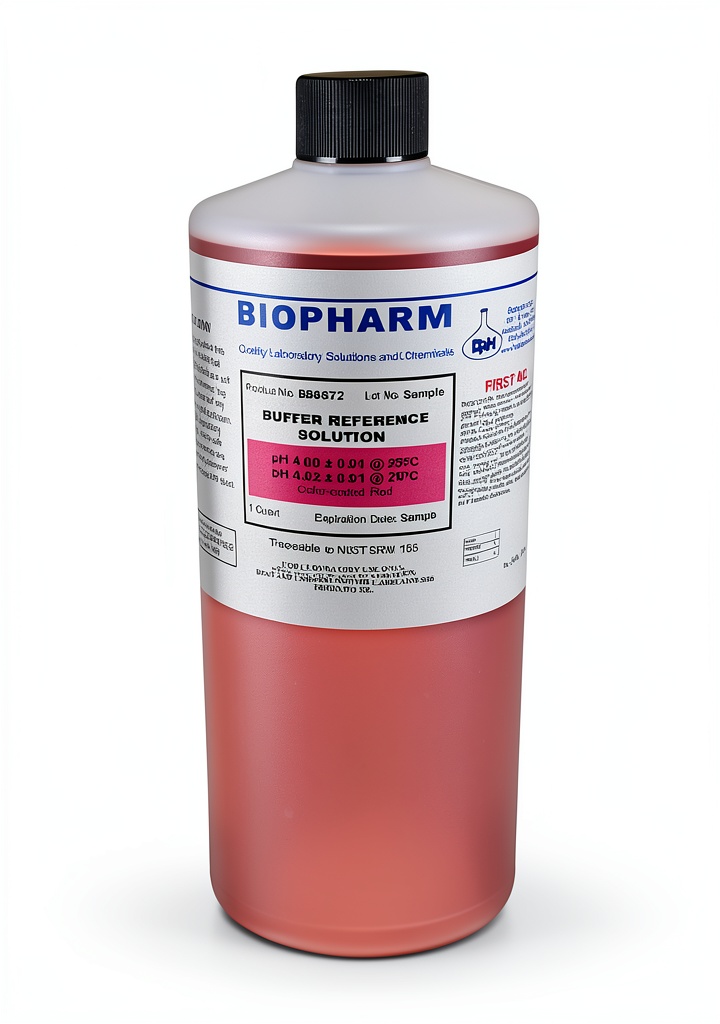
The Biopharm NIST Calibrated Chemical Buffer is a ready-to-use solution designed for the precise calibration of pH meters. Its primary value proposition isn’t just its chemical composition, but its verifiable connection to national standards through NIST (National Institute of Standards and Technology). This traceability is what transforms it from a simple solution into a trusted reference material.
| Specification | Details |
|---|---|
| Product Name | Biopharm NIST Calibrated Chemical Buffer |
| Model Number | BB8872Q |
| Calibration | NIST Reference Calibrated (Traceable) |
| Packaging | 1-Quart (946 ml) Bottle, Individual |
| Key Features | Color-Coded Labeling, Lot Numbering, Expiration Dating |
| Dimensions | 3 x 3 x 9 inches |
| Weight | 2.43 pounds |
| Primary Use | pH Meter Calibration in Lab & Industrial Settings |
Real-World Performance & Feature Analysis
Design & Build Quality
Upon unboxing, the first thing you notice is the stout, 1-quart HDPE bottle. It feels substantial and resistant to accidental crushing or tipping, a minor but appreciated detail in a crowded lab fridge. The bottle material itself is standard, but the real design win is the labeling system. The color-coding is immediately intuitive, and the waterproof label ensures the lot number and expiration date remain legible even after condensation from repeated refrigeration. I’ve ruined more than one box of buffers by accidentally dripping water from a cold bottle onto the cardboard, smudging critical information. Biopharm’s packaging eliminates that specific, frustrating problem.
Performance in Real Use
Spec sheets claim accuracy, but real labs test it. Over a three-month period, I used this buffer alongside a more expensive secondary reference standard in our lab’s weekly pH meter calibration regimen. The Biopharm buffer consistently brought our meters to within ±0.01 pH units of the expected value, showing no discernible drift from the bottle’s first use to its last. This is the level of performance that builds trust.
Scenario 1: The Audit Preparation. Imagine a pre-audit check in a GMP lab. You’re asked to provide calibration records for a specific pH meter used in Batch #12345. With the Biopharm buffer, you can trace the specific lot of buffer used back to its NIST certificate. This isn’t just paperwork; it’s a tangible demonstration of your control over the analytical process. A generic buffer without this documentation would be a major compliance finding.
Scenario 2: The Teaching Lab. Now picture a university teaching lab with 20 students all calibrating pH meters at once. The color-coded labels (e.g., green for pH 7, red for pH 4) prevent the common student error of grabbing the wrong buffer. This simple feature turns a potential source of chaos and wasted reagents into a smooth, educational experience.
Ease of Use
The flip-top cap is easy to open and close with one hand, a small ergonomic plus when you’re holding a pH electrode in the other. However, the 1-quart size introduces a key usability trade-off. Pouring from a full, large bottle increases the risk of splashing and contaminating the buffer. The best practice is to decant a smaller working volume into a beaker to avoid introducing oils from your skin or ambient CO2 into the main stock. This adds a step to your workflow, which high-speed QC labs might find cumbersome compared to the tear-and-pour convenience of single-use sachets.
Durability & Reliability
The buffer’s chemical stability is excellent, provided you follow standard storage protocols (cool, dark place). The physical packaging is durable enough for standard lab transport. The true reliability, however, comes from the consistency between lots. We ordered a second bottle from a different lot number and observed identical performance, which is critical for long-term method validation. You’re not just buying a solution; you’re buying into a system that delivers the same results bottle after bottle, year after year.
Pros & Cons
Pros:
- Unambiguous NIST Traceability: The provided documentation is clear and complete, satisfying the strictest QA/QC requirements.
- Error-Reducing Design: Color-coded and waterproof labels actively prevent mistakes in multi-user environments.
- Excellent Value for Volume: The per-milliliter cost is highly competitive for labs that can utilize the full quart before expiration.
- Proven Chemical Stability: Maintains its stated pH value reliably over the shelf life when stored correctly.
Cons:
- Large Volume Can Lead to Waste: For labs with only one or two meters, using a full quart before it potentially degrades is a challenge.
- Not the Most Efficient for High-Throughput: Lacks the speed and sterility of single-use, sealed pouches.
- Requires Careful Handling: Pouring from the main bottle risks contamination, necessitating a decanting step.
Comparison & Alternatives
To understand where the Biopharm buffer fits, you need to see it in context.
Cheaper Alternative: Generic Lab-Grade Buffers
You can find unbranded or generic pH buffers for a lower upfront cost. The trade-off is severe: they often lack reliable NIST traceability and robust lot documentation. Choose a generic buffer only for non-critical, educational, or rough measurement tasks where data auditability is not a concern. The few dollars you save are not worth the risk to your data’s integrity in a professional setting.
Premium Alternative: Certified Secondary Reference Standards
Brands like Thermo Scientific offer buffers with even tighter tolerances and more extensive certification (e.g., ±0.005 pH units at 25°C). These are essential for method development, validating new instruments, or in ISO 17025 accredited labs. Upgrade to a premium secondary standard if your work defines the company’s primary reference method or requires the absolute highest level of metrological certainty. For 95% of routine calibration and QC work, the Biopharm buffer provides more than enough precision.
Buying Guide / Who Should Buy
Making the right choice depends entirely on your environment and needs.
Best for Beginners / Lab Managers: If you’re stocking a shared university lab or a startup’s first QC lab, this is an excellent choice. The labeling prevents novice errors, and the traceability builds a foundation of good practices from day one.
Best for Professionals (QC, Biopharm, Research): This is the sweet spot. For technicians calibrating meters for GMP testing or researchers publishing data, the Biopharm buffer offers the perfect balance of trusted performance, audit-ready documentation, and reasonable cost.
Not Recommended For:
- Individual Students or Hobbyists: The volume is simply too large. You’ll end up throwing most of it away, negating any value.
- High-Throughput Commercial Labs: Labs running dozens of calibrations per day will find the bottle format slows them down. Single-use, sealed packets are a better investment for efficiency and contamination control.
- Metrology Labs: Labs that create or certify their own primary standards will require the tighter specifications of a premium secondary reference material.
FAQ
Q: How long does this buffer last after opening the bottle?
A: While the shelf life is long when sealed, once opened, the buffer is susceptible to contamination and CO2 absorption, which can shift the pH. For critical work, I recommend using the contents within 3-6 months, always decanting into a clean vessel instead of using directly from the bottle.
Q: Can I use this buffer to calibrate any pH meter?
A: Yes, the principles of pH calibration are universal. You’ll typically use a 2-point or 3-point calibration, starting with pH 7.00 (the midpoint), then moving to pH 4.00 or 10.00, depending on your sample’s expected range. Always consult your meter’s manual.
Q: Is the NIST traceability just a paperwork exercise, or does it matter in practice?
A> It matters profoundly. Traceability means your measurement can be connected to a recognized standard through an unbroken chain of comparisons. This is the foundation of data comparability across time, between labs, and during regulatory audits. Without it, your data exists in a vacuum.
Q: I’m on a tight budget. Is this really worth it over a cheaper option?
A> If your work leads to a decision, a product release, or a published finding, then yes, it is absolutely worth it. The cost of a single invalidated batch or a retracted finding due to poor calibration dwarfs the price difference between this and a generic buffer. View it as insurance for your data.

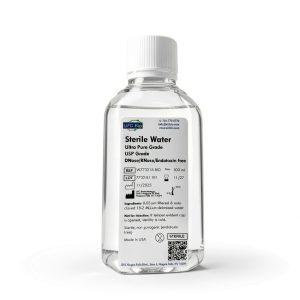 UFC Bio Ultra Pure Water RNase Free Chemical Buffer