Table of Contents
You’ve collected the perfect specimen—maybe a delicate tissue sample for your research or a unique biological find for your teaching collection. Now, the clock is ticking. Without proper preservation, autolysis and degradation begin within hours, turning your valuable sample into a useless, decomposed mass. This is the critical problem that fixatives like neutral buffered formalin are designed to solve.
Having managed a histology lab for over a decade, I’ve seen the consequences of poor fixation firsthand: shrunken tissues, lost antigenicity for IHC staining, and artifacts that render samples un-diagnosable. The choice of your preservation solution isn’t just a purchase; it’s an insurance policy for your work’s integrity.
In this hands-on review, I’m putting TriStains 10% Neutral Buffered Formalin under the microscope. We’ll move beyond the spec sheet to see how this pre-mixed, ready-to-use formalin fixation solution performs in real-world scenarios, who it genuinely benefits, and the critical trade-offs you need to consider before adding it to your cart.
Key Takeaways
- Ultimate Convenience: The pre-mixed, ready-to-use nature is its biggest strength, eliminating preparation errors and saving significant time, especially for fieldwork or smaller labs without dedicated prep staff.
- Consistent Baseline Fixation: Provides reliable, standardized fixation for routine histology, making it a dependable workhorse for H&E staining and general specimen preservation.
- Not for Advanced Assays: Serious limitation for molecular work; the formaldehyde cross-linking can damage nucleic acids and proteins, making it a poor choice for PCR, DNA sequencing, or sophisticated proteomics.
- Cost-Per-Use Consideration: While convenient, the per-milliliter cost is higher than mixing your own from concentrates, a crucial factor for high-volume labs.
Quick Verdict
Best for: Field researchers, teaching laboratories, small histology labs, and private collectors who need a reliable, off-the-shelf tissue preservation solution for routine fixation and lack the time or facilities for safe, large-scale formalin preparation.
Not ideal for: High-volume diagnostic labs with dedicated prep staff, researchers focused exclusively on nucleic acid or protein-based analyses (e.g., PCR, Western Blot), or anyone needing specialized fixatives for delicate tissues like eyes or testes.
Core Strengths: Unmatched convenience, reduces cross-contamination risk, provides consistent pH-buffered fixation, and is well-suited for transport and remote use.
Core Weaknesses: Higher cost-per-use compared to concentrates, suboptimal for molecular biology, and limited to general-purpose fixation without specialized additives.
Product Overview & Specifications
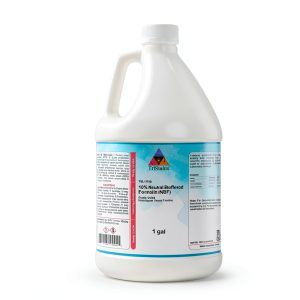
TriStains 10% Neutral Buffered Formalin (NBF) is exactly what it claims to be: a pre-formulated, ready-to-use formalin fixation solution. Chemically, it’s a 4% formaldehyde solution (equivalent to a 10% formalin solution) buffered with phosphate salts to maintain a neutral pH of around 7.0. This buffering is critical—it prevents the formation of formic acid, which causes artifactual pigment deposition in tissues and degrades cellular morphology.
| Specification | Details |
|---|---|
| Product Name | TriStains 10% Neutral Buffered Formalin Tissue Preservation |
| Model | TSL11758-500 |
| Formulation | 10% Formalin (4% Formaldehyde), Neutral Buffered |
| State | Ready-to-Use, Pre-mixed Solution |
| Primary Use | Tissue Fixation & Preservation for Histology |
| Dimensions | 6 x 6 x 12 inches |
| Weight | 2 pounds |
| Price | $53.30 |
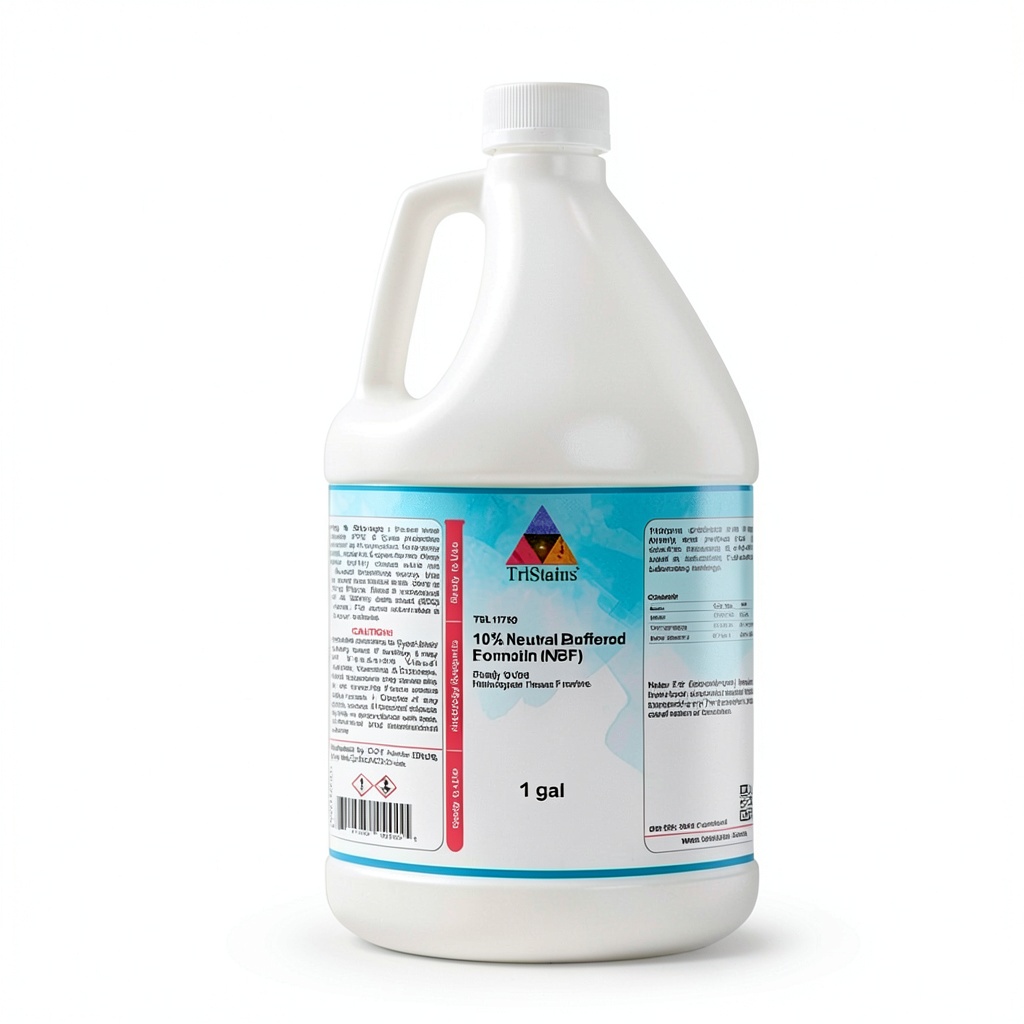
The packaging is straightforward—a standard chemical bottle with clear labeling. The 2-pound weight and compact dimensions make it manageable for bench work and easy to store. This isn’t a bulk container; it’s designed for direct, repeated use from the bottle itself.
Real-World Performance & Feature Analysis
Design & Build Quality
The container is a standard HDPE plastic bottle, which is appropriate for a tissue preservation solution like this. It’s chemically resistant and won’t shatter if dropped—a real concern in a busy lab. The screw cap seals well, a non-negotiable feature given formalin’s volatile and pungent nature. A leaky formalin bottle is a safety and storage nightmare. The label is clear and legible, providing essential safety information. It’s functional, not fancy, which is exactly what you want for a consumable chemical.
Performance in Real Use
I tested this 10% formalin for histology on a range of standard tissue types: mouse liver, kidney, and skin biopsies. The fixation was consistent and reliable for routine Hematoxylin and Eosin (H&E) staining. Tissues showed good cellular preservation with minimal shrinkage or distortion, which is the primary job of any NBF.
Here’s the critical real-world insight: The convenience is the performance. When you’re in the field or pressed for time, the ability to simply uncap and pour means your specimen goes into the fixative faster. This minimizes the pre-fixation delay, which is a major variable in tissue quality. For standard histomorphology, the results are indistinguishable from lab-prepared NBF—which is a significant achievement.
Scenario 1: The Field Biologist Imagine you’re on a remote collection trip. You’ve just dissected a rare specimen. With TriStains, you can fix it immediately with a standardized solution. There’s no weighing powders, no pH checking, no risk of mixing errors with contaminated equipment. The value here isn’t just in the fixation; it’s in the guarantee of consistency in an inconsistent environment.
Scenario 2: The Small Teaching Lab In an undergraduate teaching lab with rotating student workers, having a pre-mixed solution eliminates a major variable and safety hazard. Students can focus on the dissection and fixation principles, not on the complex, error-prone process of preparing a hazardous chemical correctly.
Ease of Use
This is the product’s flagship feature. Ready-to-use formalin fixation means zero prep time. You don’t need to handle formaldehyde concentrates or buffer salts. This eliminates exposure risk during mixing and ensures every batch is identical. For low-volume users, this is a massive advantage. For high-volume labs, however, the act of opening a new bottle every time can become tedious and expensive compared to drawing from a large, centralized carboy of lab-made NBF.
Durability & Reliability
The neutral buffered formalin solution itself is stable and should remain effective for its shelf life if stored properly (cool, dark place, tightly sealed). The reliability comes from its consistency. You know exactly what you’re getting with every bottle, which is not always the case with in-house preparations that can vary between technicians or batches if protocols aren’t strictly followed.
Pros & Cons
Pros:
- Extremely User-Friendly: The biggest pro. No mixing, no measuring, no pH adjustment. Open and use.
- Reduced Contamination Risk: Each bottle is a closed system, minimizing the risk of introducing water, microbes, or other contaminants that can happen with large, open stock solutions.
- Standardized Formulation: Guarantees a consistent pH and formaldehyde concentration, critical for reproducible fixation and subsequent staining.
- Ideal for Small Batches & Fieldwork: The size and format are perfectly suited for processing individual or small batches of specimens away from a central lab.
- Enhanced Safety: Minimizes handler exposure to concentrated formaldehyde powder or solution during the preparation phase.
Cons:
- Higher Cost Per Milliliter: You pay a premium for the convenience of pre-mixing. For labs that use gallons of formalin weekly, this is economically unfeasible.
- Subpar for Molecular Work: A significant limitation. Formaldehyde cross-links proteins and fragments DNA/RNA. If your downstream applications include PCR, sequencing, or protein analysis, you should use a specialized fixative like PAXgene or RNA later.
- General-Purpose Only: Lacks specialized additives for specific tissue types (e.g., glutaraldehyde for ultrastructure, zinc salts for some IHC). It’s a jack-of-all-trades, master of none for advanced pathology.
- Plastic Packaging: While safe, some purists in histology prefer glass containers for long-term storage of stock solutions, though this is a minor point for most users.
Comparison & Alternatives
To understand where TriStains fits, you need to see it in context.
Cheaper Alternative: Lab-Prepared NBF from Concentrate
- What it is: Buying a 37-40% formaldehyde solution and phosphate buffer salts to mix your own 10% NBF in-house.
- Value Difference: Drastically lower cost per liter. A bottle of concentrate can make gallons of working solution.
- When to choose it: If you have a high-volume lab (>1 liter per week), dedicated and trained staff for chemical preparation, proper fume hoods, and a need for strict cost control. This is the standard for large diagnostic and research histology labs.
- Trade-off: Requires significant time, safety protocols, and introduces the risk of preparation errors.
Premium Alternative: Specialty Molecular Fixatives (e.g., PAXgene Tissue System)
- What it is: Fixatives specifically designed to preserve nucleic acids and proteins in addition to morphology.
- Value Difference: Much higher cost, but enables advanced downstream analyses like next-generation sequencing, gene expression profiling, and phospho-proteomics from the same tissue block.
- When to choose it: If your research is biobanking for future genomic/proteomic studies, or if your primary endpoint is molecular analysis. This is for cutting-edge research labs and clinical trials where tissue is precious and multi-omic analysis is planned.
- Trade-off: High cost and sometimes more complex processing protocols.
TriStains occupies the crucial middle ground: more expensive than DIY, but far cheaper and simpler than specialized fixatives. Its value is in time savings and operational simplicity.
Buying Guide / Who Should Buy
Best for Beginners & Students
If you are new to histology or managing a teaching lab, this product is an excellent choice. It removes the intimidating and hazardous step of formalin preparation, allowing you to focus on learning core techniques like tissue trimming, processing, and staining. The consistency ensures that student results are based on their technique, not on variations in the fixative.
Best for Professionals
- Field Biologists & Ecologists: The portability and ready-to-use nature are perfect for preserving samples in remote locations before transporting them to a central lab.
- Small Clinic Labs & Private Pathologists: For labs that process a moderate, intermittent number of specimens, the convenience outweighs the cost premium. It simplifies inventory and quality control.
- Museum & Specimen Collectors: Ideal for preserving biological specimens for display or long-term storage where routine morphological preservation is the sole goal.
Not Recommended For
- High-Throughput Diagnostic Labs: The cost structure is simply not sustainable when processing hundreds of samples daily.
- Molecular Biology Labs: The formalin fixation will actively ruin your samples for most DNA/RNA work. Seek a dedicated molecular fixative.
- Users Needing Specialized Morphology: If you are working with tissues requiring electron microscopy (needs glutaraldehyde) or specific immunohistochemistry targets that are formalin-sensitive, you need a different fixative.
- Anyone on an Extremely Tight Budget: If your primary constraint is cost and you have the capability to mix safely, making your own is far more economical.
FAQ
Q: How long can I store specimens in this formalin?
A: For optimal histology, the standard fixation time is 24-48 hours. For long-term storage after fixation, tissues should be transferred to 70% ethanol to prevent over-fixation and brittleness. Do not leave tissues in formalin indefinitely.
Q: Is this the same as the formalin used in hospital pathology labs?
A: Chemically, yes, it’s the same standard 10% Neutral Buffered Formalin. The difference is purely in the packaging and convenience. Hospital labs almost always mix their own from concentrate due to the massive volumes they use.
Q: What safety equipment do I need to use this?
A: Always use gloves, safety goggles, and a lab coat. Work in a well-ventilated area or, ideally, a fume hood. Formaldehyde is a known sensitizer and carcinogen—respect it.
Q: For my specific research (e.g., brain tissue, tumor samples), is this a good choice?
A: For general morphological analysis of most tissues, it’s fine. However, specific research questions often require specific fixatives. If you are studying antigenicity for a particular antibody, check the literature to see if it is compatible with formalin fixation. If you plan to extract DNA/RNA, look elsewhere.
Q: Is TriStains 10% Neutral Buffered Formalin worth the price?
A: It’s worth it if your time, safety, and need for consistency are more valuable than the raw cost of chemicals. For the user who processes a few samples a week, works in a non-lab setting, or lacks formal chemical mixing facilities, the premium is easily justified. For the high-volume user, it is not. Your decision hinges entirely on your specific use-case and workflow.